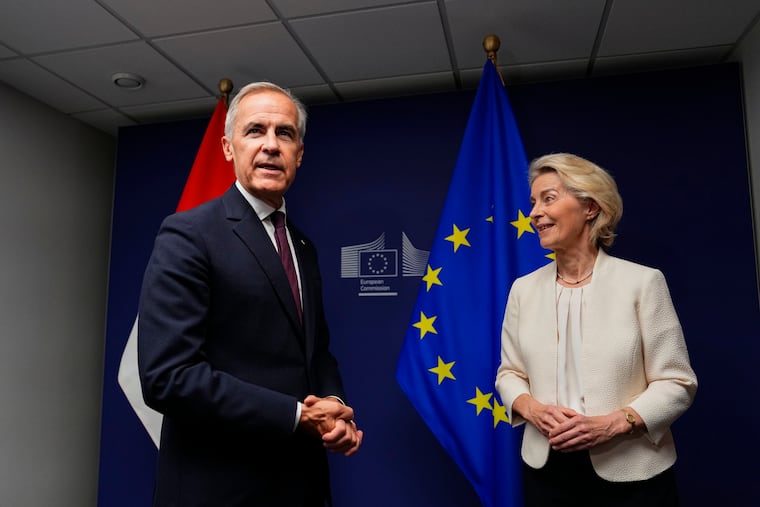
Canada strengthens ties with the EU amid ongoing tensions with Trump Administration.
In recent developments underscoring shifting international alliances, Canada is actively seeking to strengthen its ties with Europe and Asia amid a tumultuous relationship with the United States under the Trump administration. Following a trade conflict and growing concerns about U.S. unpredictability, Canadian Prime Minister Mark Carney has emerged as a leading advocate for a more robust partnership with the European Union (EU).
During an address before the European Parliament in Strasbourg, Carney received an unprecedented proposal from European Commission President Ursula von der Leyen. She expressed her desire to establish Canada as the first “associate member” of the 27-nation bloc, aiming to elevate the Canada-EU relationship beyond mere trade to encompass broader security and strategic interests.
European lawmakers responded positively to the proposal, reflecting a growing consensus around the need for strengthened alliances in light of changing geopolitical dynamics. This initiative comes at a time when traditional partnerships are being reevaluated, particularly among nations previously reliant on U.S. leadership.
Carney emphasized the necessity of a “unique alliance” with the EU, particularly in areas such as energy and critical minerals. He argued that as global security becomes increasingly fragile, it is crucial for democratic nations to unite. The European Parliament’s commitment to facilitating a stronger Canada-EU relationship highlights this sentiment, with EU leaders echoing the call for enhanced collaboration.
The discussions have included potential agreements involving visa-free travel for Canadians within EU nations, alongside efforts to reduce trade barriers and enhance joint production in the defense sector. This is particularly relevant as Canada navigates the complexities of its relationship with China and moves to solidify its defense capabilities in response to U.S. tariffs and trade pressures.
Despite the promising dialogue, European leaders remain cautious about how an associate membership would be structured and its implications for future EU expansions. The concept of associate membership, which currently does not exist, raises questions about how it would interact with existing membership frameworks and the aspirations of other nations seeking EU entry.
The potential for a deeper partnership between Canada and the EU reflects a significant shift in international relations, born out of a necessity to redefine alliances in a global landscape marred by uncertainties. As Canada seeks to enhance its international standing, the implications of this evolving partnership hold promise for both Canadian and European interests in the face of challenges posed by shifting U.S. foreign policies.
Trade between the EU and Canada reached approximately 0 billion last year, illustrating the economic importance of this potential alignment. While Canada continues to navigate a complex geopolitical environment, its focus on solidifying ties with Europe may represent a strategic move to bolster its global presence.
In summary, Canada’s pursuit of a closer relationship with the EU encapsulates a broader trend among nations seeking to reassess their alliances, emphasizing collaboration and shared values in an increasingly fractured world. As discussions progress, the outcome could redefine not only Canada’s position but also the nature of transatlantic relations in the coming years.
Media News Source