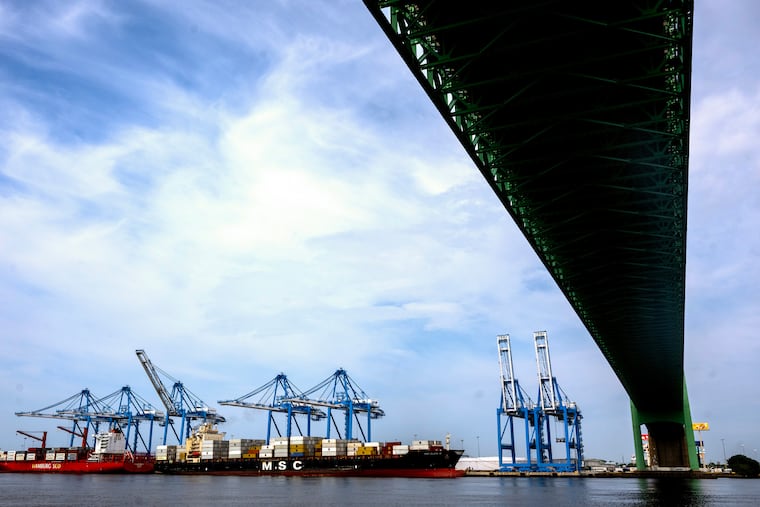
Philadelphia port undergoes largest expansion in history, adding more cars, containers, and cranes to enhance capacity and operations.
The Port of Philadelphia is poised for a significant expansion aimed at significantly increasing its cargo capacity, thereby strengthening the region’s position as a vital hub in global trade. Under the leadership of Pennsylvania Governor Josh Shapiro, a plan has been initiated that includes a substantial investment of 1 million in state funding. This investment is expected to be complemented by additional federal funds and private sector contributions, which together are anticipated to create thousands of jobs in the area.
Governor Shapiro characterized this expansion as a strategic move to bolster Philadelphia’s global trade capabilities, particularly in light of recent economic challenges exacerbated by tariffs imposed by former President Donald Trump. These tariffs have raised the price of imported goods, and the governor’s initiative aims to navigate these challenges by enhancing the port’s infrastructure to attract more goods. The port’s expansion is projected to accommodate double the current volume of container cargo and increase its capacity for automobile handling by more than 100,000 units.
The financial framework for this ambitious project involves multiple funding sources. The state funding of 1 million includes million earmarked for the acquisition of a 152-acre rail yard from Norfolk Southern Corporation. In addition, grants totaling approximately 6 million from the federal government will further support the expansion. Furthermore, private investments are expected to contribute at least 0 million to the project, with both Holt Logistics Corporation and Glovis America committing substantial funds.
PhilaPort currently supports around 8,000 direct jobs related to dock operations and associated industries. With the new investments, an additional 6,000 direct jobs are anticipated, along with projected annual tax revenues of approximately million for state and local governments. These projections are underpinned by a study that suggests significant economic benefits stemming from the expansion, although details of the study have not been publicly shared due to sensitivity concerns.
The expansion will focus on adding facilities in Philadelphia’s southern port district, particularly at the Southport Auto Terminal. Initiatives will include the construction of additional berths to alleviate congestion and facilitate greater cargo processing efficiency. The expansion plan is a response to increased competition from neighboring ports and aims to leverage the port’s existing assets and workforce.
As the port gears up for these developments, it reaffirms its commitment to enhancing its role in various cargo sectors, including automobiles, paper products, petroleum, steel, and perishables. After setting a record by handling 889,000 container units and 250,000 automobiles last year, the port’s expansion is poised to further enhance its operational capacity. Aiming to more than double container handling to an impressive 2 million units, PhilaPort is determined to seize a greater market share in maritime trade, adapting to the rising demands of the global supply chain. The timeline for these critical projects is set on an aggressive scale, with construction and bidding anticipated to move forward rapidly.
These developments underscore a pivotal moment for the Port of Philadelphia as it positions itself to play a transformative role in the region’s economy and strengthen its competitive edge in nationwide shipping and logistics.