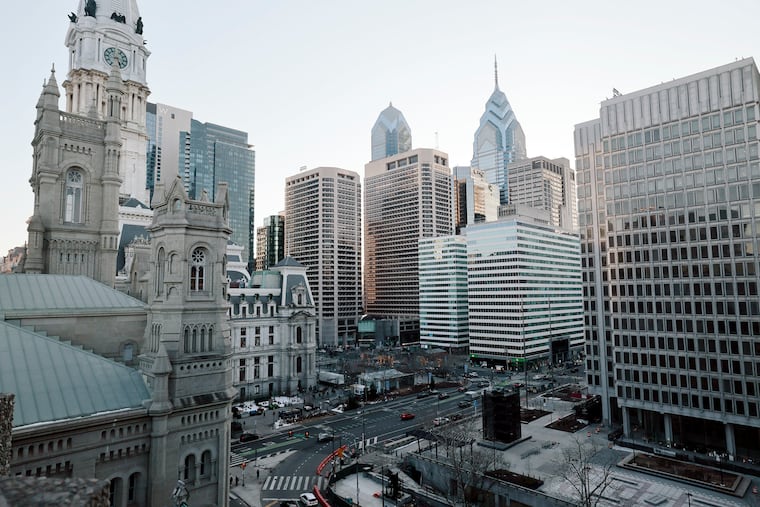
Center City sees decrease in vacant storefronts, yet occupancy rate remains low.
Recent data from the Center City District (CCD) indicates a positive trend in the retail landscape of Center City, Philadelphia, with an increase in occupied storefronts over the past six months. As of the latest semiannual survey released by the CCD, the occupancy rate of retail spaces in this vibrant area has risen to 84.2%, a notable improvement from the 82.6% reported six months earlier. This uptick marks the highest occupancy rate observed in the last two years, although it still falls short of the pre-pandemic levels of 89% achieved in 2019.
The survey reveals that the number of occupied storefronts has seen a net increase of 32, highlighting a growing consumer base eager to engage with local businesses. The data reflects a steady or improved occupancy across major commercial corridors, suggesting a diversification of the retail market driven by an increasing residential population. Local residents who live and work in Center City are supporting this commercial resurgence, as evidenced by the emergence of businesses tailored to their needs, including barber shops, salons, restaurants, and jewelry stores.
Despite these gains, the retail occupancy experienced a drastic decline during the pandemic, reaching a low of approximately 55%. The current trends indicate a robust recovery, bolstered by an anticipated calendar of major events in Philadelphia that could further stimulate local commerce.
When examining specific streets within the district, occupancy levels vary. Walnut Street leads with an occupancy rate of 87.5%, followed closely by Sansom Street at 85.1%. Chestnut Street records a more modest 80% occupancy, while Market Street lags at 71.6%. Notably, three of these four streets have demonstrated increased occupancy since the last survey, contributing positively to the overall retail environment.
In addition to these improvements, the CCD’s report highlights several recent business openings that cater to the evolving needs of residents in the area. Among these are the Jordan Brand’s “World of Flight” store, a spa and sauna named Bathhouse, and a virtual reality experience center called Tidal Force VR. The revitalization of established establishments like Iron Hill Brewery on Market Street further showcases the growing appeal of Center City as a commercial hub.
The emergence of Yemeni coffee shops, such as Haraz Coffee House and Jabal Coffee House, also reflects a broader cultural trend, as these establishments plan to open new locations on Chestnut Street. This diversification in the retail sector not only enhances the shopping experience but also contributes to the dynamic cultural fabric of Center City.
As Philadelphia continues to recover and adapt in the post-pandemic era, the resilience of its retail sector is becoming increasingly evident. The developments in Center City signal not only a revival of local commerce but hint at the potential for future growth. These trends suggest a diverse and increasingly vibrant retail environment that supports both residents and visitors alike. The ongoing efforts to improve occupancy and cultivate a rich shopping experience may foster a more robust economic foundation for the city.
Media News Source