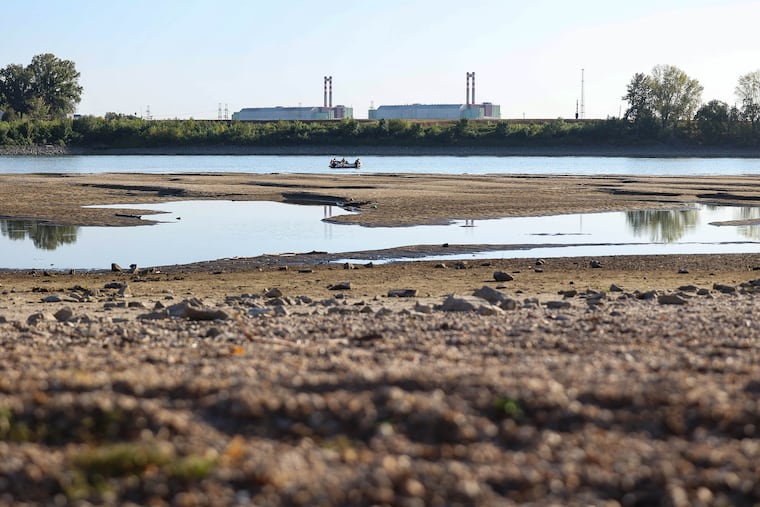
Hungary prepares for complete shutdown of Paks nuclear plant due to record low water levels in the Danube River.
Hungary’s only nuclear power plant, the Paks facility located approximately 50 miles south of Budapest, is set to shut down for the first time in its 44-year history. Prime Minister Péter Magyar announced that this unprecedented closure is a direct consequence of record-low water levels in the Danube River, which are expected to persist in the upcoming weeks. With production already reduced to 965 megawatts, significantly below its normal output of 2,000 megawatts, the Paks plant has struggled to maintain operational capacity due to insufficient water for cooling its reactors.
The Paks plant relies heavily on the Danube River for cooling purposes, but the current water levels have led to a situation where the pumps cannot draw enough water to sustain operations. Magyar indicated that complete power down is anticipated as early as Tuesday or Wednesday of next week, following a further reduction in output likely to take place later. He reassured the public that the shutdown will be executed safely and poses no environmental risks.
Notably, the Paks nuclear plant accounts for nearly half of Hungary’s electricity generation, highlighting the critical role it plays in the nation’s energy landscape. The government’s decision to halt operations underscores the significant challenges posed by climatic changes, compounded by a prolonged drought that has not only affected energy production but also disrupted the agriculture and tourism sectors in Hungary and across much of Central Europe.
In light of the current energy crisis, the Hungarian government has urged large energy-consuming companies to voluntarily curtail their usage, particularly during peak hours from 5 p.m. to 10 p.m., in an effort to stabilize the energy supply. Among those stepping forward is the Hungarian energy conglomerate MOL, which has pledged to reduce its electricity consumption by 65 megawatt-hours, equating to a 40% decrease from typical usage.
As the Danube continues to experience historically low levels—forecasted to drop even further to unprecedented negative figures—such proactive measures have become necessary to navigate the ongoing energy challenges. Magyar emphasized that the past 20 years had seen only three occasions in August where the river’s water level rose, indicating the severity of the current situation.
Looking ahead, the Hungarian government has also suggested suspending parliamentary sessions scheduled for early next week to conserve energy resources. Additionally, an order has been issued for state institutions to eliminate decorative lighting by Monday as part of a wider strategy to manage energy consumption during this critical period. The ramifications of these developments on Hungary’s energy policy and sustainability initiatives are sure to be a focal point in the weeks to come.
Media News Source